
Search our store
Popular Searches:
Tough & Reliable Camping Coffee Makers
Enjoy fresh coffee wherever your campsite takes you. COLETTI camping coffee makers are built for outdoor brewing, whether you are backpacking, car camping, travelling by RV, or heading off-grid. Choose a compact pour-over for a lightweight, simple setup, or explore our camping coffee percolators for campfire mornings and brewing several cups at once. The Sierra Collapsible Silicone Pour Over and Aspen Stainless Steel Pour Over Coffee Maker offer dependable manual brewing for smaller campsites, day hikes, and coffee breaks on the trail.
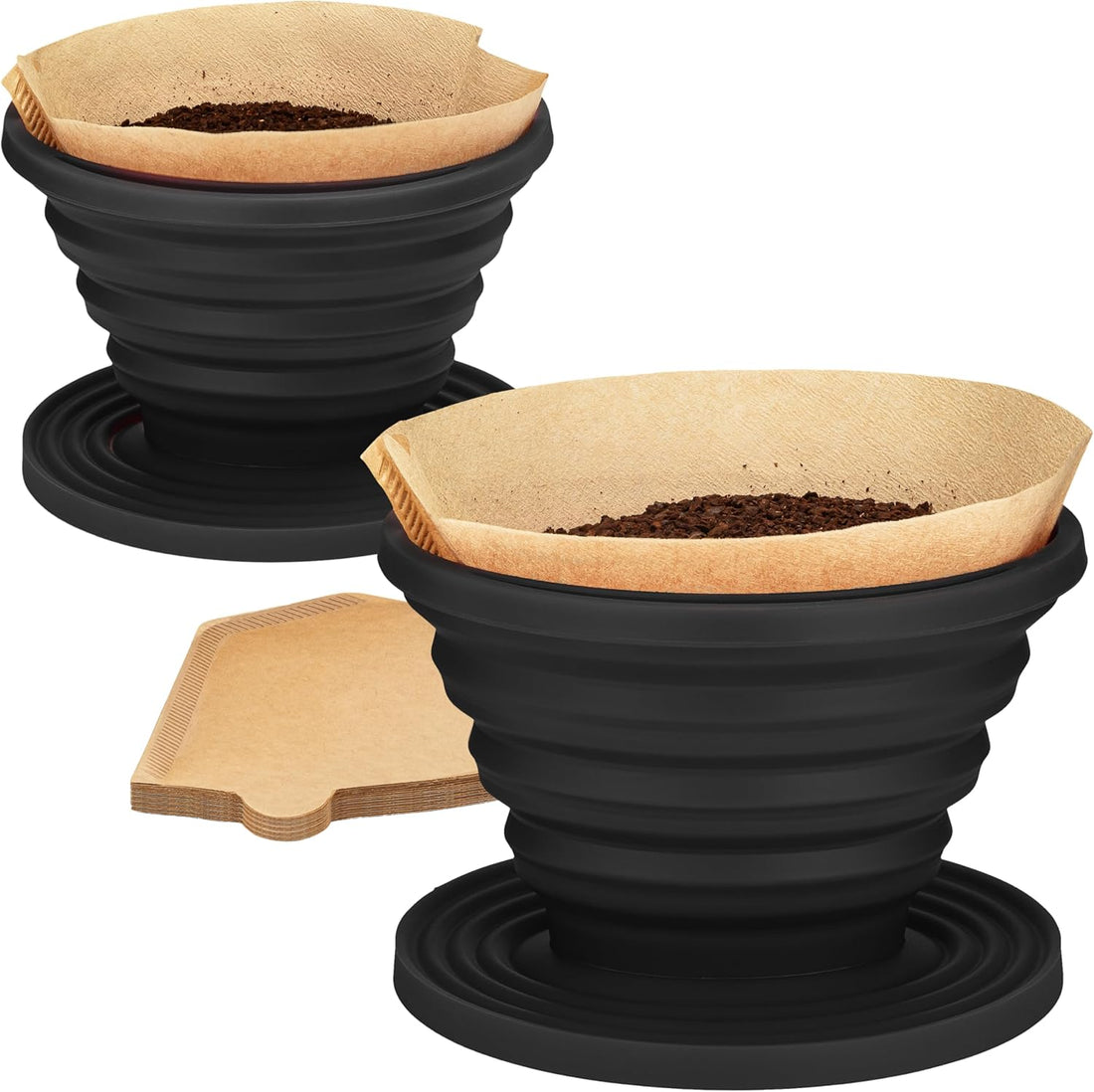


The best manual coffee makers for camping are built from materials that won’t crack, shatter, or fail in rough conditions. Stainless steel and durable silicone are ideal because they handle drops, heat, and heavy use with ease. A quality camping coffee dripper lets you brew a fresh cup anywhere — just add hot water and your favorite grounds.
The best camping pour-over coffee maker is built from materials that won’t break in your pack. Stainless steel pour-over brewers are extremely durable and handle years of outdoor use. If packing space is limited, collapsible silicone pour-overs are also popular because they fold flat and fit easily into a backpack or camping kit.
Absolutely. Portable coffee makers are perfect for car camping because they’re lightweight, easy to clean, and simple to store in your gear bin. You don’t need electricity or bulky machines to enjoy a strong cup at sunrise — just heat, water, and good coffee.
Yes. A portable pour-over coffee maker is one of the simplest ways to brew coffee outdoors without electricity. Just place the dripper over your mug, add coffee grounds, and slowly pour hot water. This method works perfectly for backpacking, car camping, and off-grid travel.
Using a portable pour over is straightforward. Place the dripper over your mug, add a filter and grounds, then slowly pour hot water in controlled circles. It’s the same process you’d use at home — just without cords, outlets, or complicated parts.
Start with freshly ground coffee and pour hot water slowly over the grounds. First add a small amount of water to allow the coffee to bloom for about 30 seconds. Then continue pouring in slow circles until the brew is complete. This method helps extract the full flavor of the coffee.
It depends on your packing needs. A collapsible silicone pour over is perfect for tight backpacks and minimalist setups. A stainless steel pour over offers maximum durability and long-term reliability, making it ideal for road trips, basecamps, and everyday use.
Yes. Many campers start with an outdoor pour over for weekend trips and end up using it daily at home. Manual coffee makers produce a rich, flavorful cup and offer full control over your brew — whether you’re in the kitchen or at camp.
There is no single camping coffee maker that suits every trip. A lightweight pour-over is useful for backpacking and small setups, while a camping coffee percolator is better suited to car camping, RV trips, campfires, and group brewing.
A portable camping coffee maker should be lightweight, durable, and easy to use without electricity. For backpacking, a collapsible pour-over can save space. Campers with more room may prefer a larger brewer that makes several cups at once.
Yes. Manual camping coffee makers can brew coffee without electricity. Depending on the brewing method, heat water over a camp stove or another suitable heat source, then brew directly at your campsite.
For backpacking, weight and packability are important. A compact pour-over coffee maker can be a practical choice because it takes up little room and is simple to use. The Sierra Collapsible Silicone Pour Over is designed for compact packing.
Car camping gives you more flexibility because you do not need to carry all your gear in a backpack. You can choose a larger coffee maker based on how many people you need to serve and your preferred brewing method. For multi-cup brewing, see the Camping Coffee Percolators collection.
Consider durability, weight, size, capacity, brewing method, ease of cleaning, filter requirements, and whether you need to use a campfire or stove. Your camping style should determine which features matter most.
